
Are Kids Allowed in Masai Mara? And in Kruger? (2026 Detailed Family Safari Guide)
Planning an African safari with children is one of those “core memory” ideas and it can absolutely be done. But families usually have one big question before they book flights: Are kids allowed in Masai Mara? And are kids allowed in Kruger? The answer is yes for both, but the real-world rules depend on age, lodge policies, activity restrictions, and the kind of safari experience you want. Families considering a Masai Mara tour from Noida or a Masai Mara tour from Faridabad should especially review lodge age policies before confirming their safari.
This guide breaks it all down in a parent-friendly way: what’s allowed, what’s restricted, what’s safest, and how to avoid booking the wrong camp for your child’s age. We’ll cover Masai Mara (Kenya) first, then Kruger National Park (South Africa), and finally a clear comparison table so you can choose the best destination for your family.
If you’re still deciding whether Masai Mara is the right family destination, start with our full reserve overview here: Masai Mara destination guide.
Are Kids Allowed in Masai Mara?
Yes kids are allowed in Masai Mara. The reserve itself does not “ban” children. However, what families often experience as “rules” are actually camp policies and activity restrictions designed to keep children safe and ensure a calm experience for all guests on shared drives.
Masai Mara works in two broad areas:
- Masai Mara National Reserve (the main reserve)
- Private conservancies around the reserve (often with special activities like night drives and walking safaris)
In both, children can stay but specific properties may impose minimum ages for certain experiences like walking safaris, night drives, or shared vehicles.
Masai Mara Age Rules (What Most Camps Follow)
There’s no single rule that applies everywhere, but most family-friendly camps follow a pattern like this:
0–5 Years: Allowed at Some Camps, Usually Limited Safari Access
- Many camps allow young children, but not all (especially unfenced, remote luxury camps).
- Shared game drives may not allow under-6 children.
- Families often book a private vehicle so the drive can return early if a child gets tired.
- Some camps offer “short drives” near camp rather than full sunrise-to-brunch drives.
6–11 Years: The Practical “Sweet Spot”
- Most camps allow children in this age range.
- Game drives are usually permitted, especially with a private guide/vehicle.
- Conservancy activities may still have age limits (especially night drives).
- Children who can sit quietly and follow instructions tend to love this age range on safari.
12+ Years: Typically Full Participation
- Most properties treat 12+ like adults for game-drive participation.
- Walking safaris may still be 12+ or 16+ depending on camp policy and terrain.
- Night drives are usually allowed (policy varies by conservancy/camp).
Why Some Masai Mara Camps Restrict Young Children
Safari is not a theme park and restrictions are usually about safety and guest experience. Camps may limit young children because:
- Wildlife can pass through camp at night (many camps are unfenced).
- Kids can make sudden movements or loud sounds that affect wildlife behavior on drives.
- Shared vehicles require long, quiet observation to spot animals and follow guide instructions.
- Some activities (night drives, walks) require mature behavior and quick compliance.
The goal isn’t to exclude families, it’s to keep children safe and reduce risk in an environment where animals are completely wild.
Is Masai Mara Safe for Kids?
Yes, Masai Mara can be very safe for kids when planned properly. The keys are:
- Choose a family-friendly property with strong safety protocols.
- Prefer camps with child-ready setups (family tents, closer access, predictable logistics).
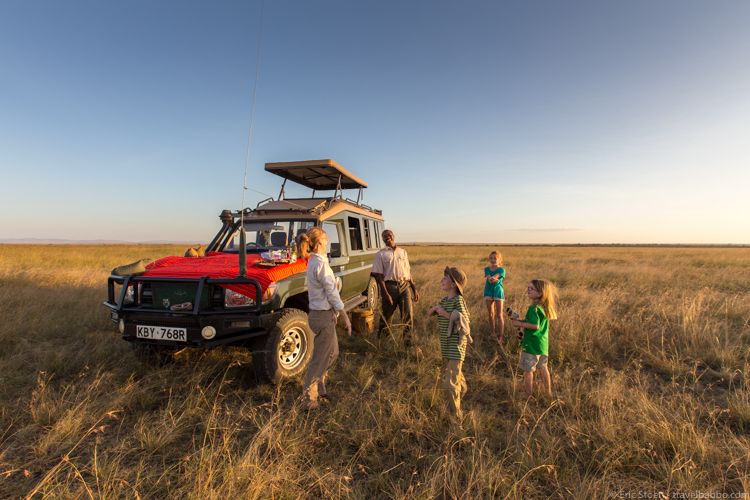
- Use private safari vehicles when traveling with younger kids.
- Follow guide rules strictly: no standing up, no shouting, no sudden movement.
For general wildlife safety guidelines and conservation rules in Kenya, you can reference official authorities like the Kenya Wildlife Service: Kenya Wildlife Service (KWS).
Best Masai Mara Safari Style for Families
When you travel with children, “more animals” isn’t always the goal. The best family safari is built around comfort, flexibility, and shorter attention cycles. Consider:
For Indian families who prefer a guided, pre-planned safari with shared logistics and expert support, a Masai Mara group tour from India can be a practical option. It helps simplify transfers, stay selection, safari timings, and overall planning while still keeping the experience comfortable for children and adults.
1) Private Game Drives
A private vehicle is often the biggest upgrade for families. You can:
- Start later if the child had a rough night.
- Return early for naps.
- Take bathroom breaks without disrupting other guests.
- Stay longer at sightings that excite your child (like elephants or giraffes).
2) Shorter Drives + Midday Rest
Two long drives per day can be too much for younger children. A common family rhythm is:
- Morning drive (shorter) → brunch → rest/pool/quiet time
- Afternoon drive (shorter) → dinner → early sleep
3) Camps That Offer On-Site Learning
Some camps add kid-friendly educational moments: animal tracking basics, bird spotting, Maasai cultural storytelling, or nature walks near camp (where permitted).
Are Kids Allowed in Kruger National Park?
Yes kids are allowed in Kruger National Park. In fact, Kruger is often considered one of the easier “first safaris” for families because:
- You can do a self-drive safari (which gives total flexibility).
- There are more developed roads and infrastructure.
- Many rest camps are fenced and family-oriented.
That said, Kruger has clearer rules on certain activities, especially walks.
Kruger Age Restrictions (Typical Rules)
Under 6 Years
- Allowed in the park and in rest camps.
- Often restricted from some guided game drives (varies by operator).
- Not allowed on guided bush walks.
6–11 Years
- Allowed on many guided drives (operator rules vary).
- Usually still restricted from bush walks until 12+.
12+ Years
- Generally allowed on guided walks and most activities (subject to operator policy).
For official park information and planning guidance, refer to SANParks (the national parks authority in South Africa): SANParks – Kruger National Park.
Masai Mara vs Kruger for Kids: Key Differences
| Factor | Masai Mara (Kenya) | Kruger (South Africa) |
|---|---|---|
| Park entry age | Children of all ages are allowed to enter the Masai Mara National Reserve. | Children of all ages are allowed to enter Kruger National Park. |
| Child entry fees | Child rates/discounted park fees typically apply (often for ages 3–17). Under-3 is often free (operator/lodge handling can vary). | Child conservation fees are discounted and can vary by residency category and park fee schedule. |
| Shared game drive age limit | Most lodges set shared open-vehicle game drives at around 6–8+ (varies by lodge/camp policy). | Most lodges set shared open-vehicle game drives at around 6+ (varies by lodge policy). |
| Private vehicle (family flexibility) | Often recommended for families with toddlers; typical add-on is about $250–$500 per vehicle/day depending on season and camp. | Private vehicles are available at many private lodges/reserves; inside Kruger NP many families use self-drive for flexibility. |
| Self-drive option | No safaris are typically guided in 4x4 safari vehicles (through camps/operators). | Yes self-drive in a closed car is a major advantage for families (shorter drives, nap breaks, quick returns). |
| Malaria risk | Malaria-risk area (risk can be higher after rains). Families should consult a travel clinic for child-safe prevention guidance. | Malaria-risk area; risk is generally lower in the dry winter season (commonly May–Sept). South Africa also has malaria-free safari regions. |
| Best for toddlers (under 3) | Possible, but a private vehicle is strongly recommended for flexible timings, naps, and shorter loops. | Often easier because self-drive lets you control drive length and return to camp quickly. |
Health Considerations: Malaria & Vaccines for Kids
Both Masai Mara and Kruger can be malaria-risk zones depending on season and exact location. For families, it’s smart to plan prevention early:
- Speak with a pediatrician or travel clinic about child-safe antimalarials.
- Use repellent (child-appropriate), long sleeves in the evening, and closed shoes.
- Prefer camps with nets/screens and good mosquito control.
For general malaria information and prevention guidance, you can reference the WHO malaria fact sheet: World Health Organization (WHO) — Malaria.
What’s the Best Age to Take Kids on Safari?
There’s no single “right age,” but parents usually report the best experience when children are:
- 6–12 years (they can follow rules, stay quiet, and remember the experience)
- 12+ years (they can join most activities and handle longer drives)
Toddlers can still travel, but you’ll want a camp that genuinely supports families and you should plan for shorter drives and downtime.
What to Book to Make a Family Safari Easy
If your goal is “low stress, high magic,” these choices matter more than anything:
- Private vehicle (especially under age 8)
- Family tent/suite with safe walkways and attentive staff
- Predictable logistics (short transfers, minimal camp changes)
- 2–4 night stays in one place rather than hopping camps daily
Want help selecting a truly family-appropriate Masai Mara stay (with the right rules, comfort, and timings)? Reach out to Luxury Unlocked.
Final Thoughts: Masai Mara or Kruger for Kids?
Masai Mara is incredible for families who want a curated, guide-led safari with iconic wildlife density, especially if you choose the right camp and book a private vehicle for flexibility.
Kruger can be easier for some families because it offers self-drive flexibility and well-developed rest camps, but activity rules still apply (especially for bush walks).
If you’re leaning toward Kenya and want to explore the reserve, wildlife seasons, and safari styles in more depth, visit: Masai Mara destination guide.
With the right planning, a family safari becomes more than a vacation, it becomes a shared story your child will carry for life.
Kids in Masai Mara & Kruger - FAQs
Yes. The reserve allows children, but specific camps and activities may have minimum age rules.
Many camps allow children on game drives from age 6, while some require a private vehicle for younger kids.
It’s strongly recommended for families, especially if children are under 8, because it allows flexible timing and shorter drives.
Many camps are unfenced. Safety is managed through escorts, camp rules, and staff supervision—choose family-ready camps with clear protocols.
Yes. Children can enter Kruger, stay in rest camps, and do self-drive safaris. Some guided activities have age restrictions.
Most guided bush walks require children to be at least 12 years old (operator rules may vary).
Masai Mara is ideal for guided, curated safari luxury; Kruger can be easier for flexible self-drive and fenced rest camps. The best choice depends on your child’s age and travel style.
It can be. Consult a pediatrician about prevention, use repellents, and follow mosquito-avoidance measures, especially in evenings.
Many families find ages 6–12 ideal because kids can follow rules, enjoy sightings, and remember the experience.
Choose a family-friendly camp, book a private vehicle for flexibility, keep drives shorter, and build in rest time. For help, contact Luxury Unlocked to customize the plan.