

Ngorongoro Crater is one of those places whose scale and significance are genuinely difficult to grasp until you stand at its rim and look down. A UNESCO World Heritage Site, an ancient volcanic caldera, one of Africa's most wildlife dense ecosystems, and a living cultural landscape — it is, by any measure, one of the natural wonders of the world. Here are ten facts that begin to convey what makes it so extraordinary.
Before reading further, explore our Tanzania destination or browse Ngorongoro packages from India to start planning your visit.
Fact 1: It Is One of the Largest Intact Volcanic Calderas on Earth
Ngorongoro Crater is a caldera — formed when an enormous volcano collapsed inward on itself approximately 2–3 million years ago, after exhausting its magma supply. The resulting depression measures roughly 19 kilometres across at its widest point, with a floor area of approximately 260 square kilometres. The crater walls rise 400–600 metres above the floor. It is not a crater in the impact meteor sense — it is the collapsed summit of what was once one of Africa's tallest volcanoes.
Fact 2: It Is a UNESCO Double World Heritage Site
Ngorongoro Conservation Area was first inscribed as a UNESCO World Heritage Site in 1979 for its outstanding natural values. In 2010, it was upgraded to a mixed (natural and cultural) World Heritage Site — one of only a handful in the world — in recognition of its cultural significance, including the Maasai people's history within the landscape and the extraordinary archaeological and paleoanthropological discoveries at Olduvai Gorge and the Laetoli footprints.
Fact 3: It Holds One of Africa's Densest Wildlife Populations
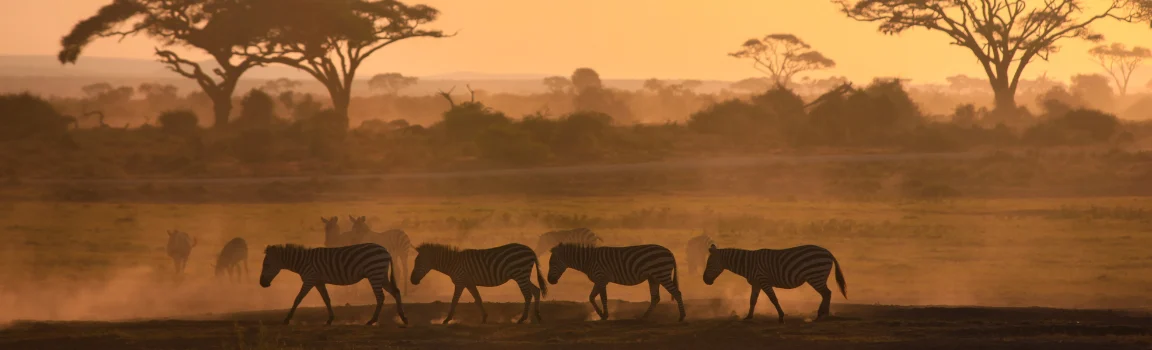
Approximately 25,000–30,000 large mammals live permanently within the 260-square kilometre crater floor — making it one of the highest wildlife densities on the African continent. The caldera's enclosed walls act as a natural fence, preventing most species from migrating out. On a single full day drive, it is genuinely possible to see 20+ different wildlife species without travelling more than a few kilometres.
Our Viewing Big Five experience is built around this extraordinary density — all five members of the Big Five are permanent residents of the crater.
Fact 4: It Is Home to One of Africa's Last Viable Wild Black Rhino Populations
This is arguably the most important conservation fact about Ngorongoro. The black rhinoceros has been driven to extinction across most of its historical African range — largely by poaching. Ngorongoro's isolated caldera, combined with intensive anti poaching protection, has allowed a small but stable black rhino population to survive here when it has disappeared elsewhere. The crater's current black rhino population numbers fewer than 30 individuals — small in absolute terms, but one of the most significant wild populations in Africa.
Seeing a wild black rhino in Ngorongoro is one of the rarest and most moving wildlife experiences available anywhere on Earth. Our specialist guides track individual rhino movements daily to maximise sighting opportunities on our Big Five dedicated drives.
Fact 5: The Crater Has Been Continuously Inhabited for Millennia
Unlike many African conservation areas which displaced local communities, the Ngorongoro Conservation Area was established as a multi use landscape. The Maasai people have grazed cattle inside the Conservation Area since its establishment and are deeply woven into the cultural and ecological story of Ngorongoro. The landscape supports both one of Africa's greatest wildlife concentrations and a living pastoral culture — a combination found almost nowhere else on the continent.
Fact 6: Olduvai Gorge — the "Cradle of Humankind" — Sits at Its Edge
Within the Ngorongoro Conservation Area, Olduvai Gorge contains one of the most remarkable sequences of fossil and stone tool evidence for human evolution anywhere in the world. Discoveries by Louis and Mary Leakey from the 1930s onwards — including Homo habilis remains dating to almost 2 million years ago — established this landscape as a key site in understanding where and how modern humans emerged. The Laetoli footprints, found nearby, are 3.6 million years old and represent the earliest known evidence of bipedal walking in hominins.
This context transforms a crater game drive into something genuinely profound: the same caldera ecosystem that sustained your ancestors for millions of years still sustains extraordinary wildlife today.
Fact 7: The Crater Has Its Own Microclimate
The Ngorongoro highlands and crater rim sit at approximately 2,300 metres above sea level — significantly cooler and wetter than the surrounding savanna. The crater floor, enclosed by walls and lower in altitude, is warmer but still significantly cooler than Tanzania's northern plains. The result is a series of distinct microclimates stacked within a few kilometres: montane forest on the rim, mist shrouded highlands, and open grassland on the floor. This variation supports an extraordinary diversity of habitats and species.
The microclimate also creates the famous dawn mist that fills the crater — the atmospheric backdrop for our Sunrise Crater Safari.
Fact 8: Lake Magadi Is a Soda Lake — and It Turns Pink
The shallow soda lake on the crater's southwestern floor — Lake Magadi — is highly alkaline, with pH levels that most freshwater species cannot tolerate. But lesser flamingos thrive on the blue green algae that bloom in these conditions. When thousands of flamingos gather at Lake Magadi, their mass turns the lake a vivid shade of pink — one of Africa's most visually arresting natural spectacles.
Our Flamingo & Lake Magadi Viewing experience is designed around this phenomenon, timed for the best light and flamingo activity periods.
Fact 9: The Crater Rim Offers Some of Africa's Best Landscape Photography
At over 2,300 metres, the crater rim overlooks the entire caldera — a 260-square kilometre world below. Late afternoon and sunset from the rim viewpoints are extraordinary: the caldera fills with golden light, clouds sometimes pool in the crater bowl, and the scale of the landscape — wildlife visible as dots on the floor below — is humbling.
Our Crater Rim Photography Experience takes photographers to the best vantage points with guidance on composition and timing. Most guests combine a dawn crater descent with an afternoon rim session — capturing both scales of the Ngorongoro experience in a single extraordinary day.
Fact 10: Ngorongoro Is Not a National Park
This surprises many visitors. Ngorongoro is a Conservation Area, not a national park — a distinction that matters. Unlike Tanzania's national parks (Serengeti, Tarangire, Lake Manyara), Ngorongoro was established as a multi use landscape that allows pastoralist Maasai communities to continue living and grazing within its boundaries. This makes it a genuinely unique model of conservation — one where wildlife and people coexist in the same ecosystem, maintaining a relationship that has existed for thousands of years.
It is this combination of extraordinary wildlife, deep geological history, living cultural landscape, and UNESCO recognition that makes Ngorongoro not merely a safari destination — but one of the genuinely irreplaceable places on Earth.
Ready to experience it yourself? View our Ngorongoro packages from India and start planning with our specialists.
Ngorongoro Crater Facts – FAQs
Ngorongoro is a volcanic caldera formed approximately 2–3 million years ago when a large volcano exhausted its magma supply and its summit collapsed inward. It is not a meteor impact crater. The resulting caldera measures roughly 19 kilometres across and contains one of the world's richest wildlife ecosystems.
Yes. Ngorongoro Conservation Area was first inscribed as a UNESCO World Heritage Site in 1979, and upgraded to a mixed (natural and cultural) World Heritage Site in 2010 — one of only a handful in the world — recognising both its outstanding wildlife and its cultural and paleoanthropological significance.
Approximately 25,000–30,000 large mammals live permanently within the 260-square kilometre crater floor — one of the highest wildlife densities on the African continent. All Big Five species are permanent residents of the crater.
Olduvai Gorge, located within the Ngorongoro Conservation Area, is one of the world's most important paleoanthropological sites. Homo habilis fossils dating to nearly 2 million years ago and stone tools spanning the same period have been discovered there. The Laetoli footprints (3.6 million years old) — the earliest evidence of bipedal walking — are also found in the Conservation Area.
Lake Magadi on the crater floor is a highly alkaline soda lake. The alkaline conditions support blue green algae blooms that lesser flamingos feed on. When conditions are ideal (particularly after rains), thousands of flamingos gather at the lake, turning it a vivid pink colour visible from across the crater floor.
The Ngorongoro Crater rim sits at approximately 2,300 metres (about 7,500 feet) above sea level. The crater walls rise 400–600 metres above the floor, creating distinct microclimates and spectacular views across the entire caldera. Early mornings on the rim can be genuinely cold — always pack a warm layer for the crater descent.