
There are safari lodges, and then there is Ngorongoro Crater Lodge. Perched on the southern rim of the Ngorongoro Crater — the world's largest intact volcanic caldera and one of the most concentrated wildlife ecosystems on earth — this extraordinary property belongs to a category of its own. It is not simply a place to sleep between game drives. It is a destination that changes how you understand Africa, and perhaps how you understand luxury itself.
The Ngorongoro Crater is a UNESCO World Heritage Site and one of the Seven Natural Wonders of Africa. It shelters approximately 25,000 large mammals within its 260 square kilometre floor — including one of Africa's last viable black rhino populations, vast lion prides, enormous elephant bulls, and the densest concentration of predators on the continent. And overlooking all of it, from a position of such dramatic elevation that guests can see the entire caldera laid out below them like a living painting, sits Ngorongoro Crater Lodge.
Planning to include Ngorongoro Crater Lodge in a broader Tanzania itinerary? Explore our Tanzania safari packages from India or read our comprehensive Tanzania honeymoon safari guide to understand how Ngorongoro fits into a complete northern circuit.
What Is Ngorongoro Crater Lodge?
Ngorongoro Crater Lodge is operated by &Beyond, one of the most respected luxury safari operators in Africa, and has been consistently ranked among the finest lodges on the continent since its opening. The property sits at approximately 2,286 metres above sea level on the Ngorongoro Crater rim — high enough that mornings are genuinely cool, evenings are cold, and the cloud formations that roll across the crater floor are something you watch from your suite with a glass of wine and a fire burning in the hearth.
The lodge consists of three separate camps — North Camp, South Camp, and Tree Camp — each comprising a small number of individual suites connected by elevated wooden walkways through the montane forest. Each suite is a private, self contained structure with its own fireplace, private butler, plunge bath, and veranda positioned to maximise the crater view below. The architecture is deliberately theatrical: Maasai mud and thatch aesthetic on the exterior, ornate Baroque influenced interior design featuring rich brocades, chandeliers, four poster beds, and decorative details that feel more like a Venetian palazzo than a bush camp. It is a deliberate and extraordinary juxtaposition — the raw African wilderness outside, palatial grandeur within — and it works with complete conviction.
The lodge has been recognised by Condé Nast Traveler for its extraordinary crater-rim setting, distinctive design and highly personalised service. Its appeal comes not merely from the facilities, but from the sheer improbability of experiencing this level of comfort in such a dramatic wilderness location.
The Ngorongoro Crater: Understanding What You Are Looking At
To understand why Ngorongoro Crater Lodge occupies such an extraordinary position, you need to understand the Ngorongoro Crater itself. Approximately 3 million years ago, a massive volcano — estimated to have been higher than Kilimanjaro — collapsed inward following a catastrophic eruption, creating a caldera of astonishing dimensions: 19 kilometres wide, 610 metres deep, and covering 264 square kilometres of floor area. The result is a natural enclosure of such scale and topographic complexity that it functions as a complete, self sustaining ecosystem — essentially a world within a world.
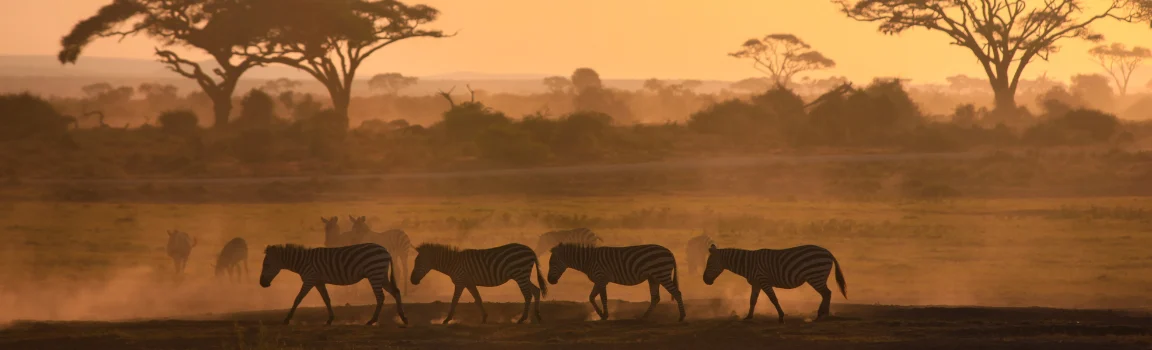
The crater floor supports an extraordinary diversity of habitats: open grassland plains, two freshwater lakes (Lake Magadi and the smaller Ngoitokitok spring area), acacia woodland, swamp, and highland forest. These varied habitats sustain the extraordinary wildlife density that makes the crater unique. Because the crater walls act as a natural boundary, most wildlife remains within the caldera year round rather than following seasonal migration patterns — meaning every single descent into the crater floor produces exceptional wildlife viewing, regardless of month or season.
This is the view from your suite at Ngorongoro Crater Lodge. Not a distant glimpse. The entire caldera — all 264 square kilometres of it — visible from your veranda, your bathtub, your bed.
The Lodge: Architecture, Design & Atmosphere
Ngorongoro Crater Lodge's design is one of the boldest aesthetic statements in African hospitality. The creative brief, executed at the lodge's original construction, was to create something that felt simultaneously rooted in the Maasai cultural landscape and utterly beyond it — a lodge that took the theatrical drama of its location and matched it with interior drama of equal intensity.
The result is unlike any other lodge in Africa. The exterior structures use traditional Maasai building techniques and materials — the curved mud walls, the thatched roofing, the organic integration with the forest — but step through the entrance of any suite and you enter a world of extraordinary decorative richness. Ornate chandeliers hang above four poster beds dressed in heavy brocade. Antique style mirrors, gilded frames, and carved wooden furniture create a European aristocratic salon atmosphere. Persian style rugs cover polished hardwood floors. The fireplace — lit every evening by your butler — provides warmth against the crater rim chill and the kind of flickering, amber ambiance that no electric light can replicate.
Every suite faces the crater. Every veranda is positioned to command the caldera view. Every detail — from the hand selected antique furnishings to the positioning of the freestanding bathtub — has been considered in relation to the landscape outside. Bathing while watching elephant move across the crater floor 600 metres below is an experience that collapses the boundary between civilization and wilderness in a way that is entirely unique to this lodge.
The Three Camps: North, South & Tree Camp
North Camp
North Camp is the main camp and the most fully equipped, with the lodge's primary dining room, wine cellar, and communal lounge areas. It comprises twelve suites positioned on the crater rim with direct caldera views. North Camp is the social centre of the property — where sundowners are served in the crater rim lounge and where the most dramatic panoramic views from the communal spaces are found. For first time visitors, North Camp provides the most comprehensive Ngorongoro Crater Lodge experience.
South Camp
South Camp shares North Camp's level of suite quality and crater rim positioning but feels slightly more intimate, with its own dining area and a more private, secluded atmosphere. South Camp is often preferred by couples and honeymooners who value discretion and quiet over social buzz. The twelve suites here offer the same crater views and butler service as North Camp, with a slightly less formal dynamic.
Tree Camp
Tree Camp is the most exclusive and private of the three, consisting of just six suites set deeper into the crater rim forest. For guests who prioritise absolute privacy — where the only sounds are forest birds, the wind in the giant heather, and the distant movement of wildlife below — Tree Camp is the most immersive and intimate option. Tree Camp can be booked as a private exclusive use camp for groups or families who wish to have the entire camp to themselves, with dedicated staff and a customised programme.
The Suites: What to Expect Inside
All suites at Ngorongoro Crater Lodge share the same fundamental qualities: private veranda with unobstructed crater view, working fireplace, en suite bathroom with freestanding bath, indoor shower, double vanities, butler service, and exceptional bedding. The specific dimensions and layout vary slightly between suite types, but the experience standard is consistent across all three camps.
Key suite features worth knowing before you arrive:
- Butler service: Each suite has a dedicated butler who manages everything from unpacking luggage and drawing the evening bath to laying out clothes, preparing pre departure tea and snacks, and ensuring the fire is burning when you return from a game drive. The butler service at Ngorongoro Crater Lodge is frequently cited by guests as the defining element of the experience — genuinely attentive, warm, and deeply skilled at anticipating needs without being intrusive.
- The fireplace: Ngorongoro sits at over 2,200 metres elevation. Evenings and early mornings are cold — sweater and blanket cold, often dropping to single digit Celsius temperatures. The fireplace in each suite is not a decorative flourish; it is essential to the experience. Watching the evening fire with the crater view through the window is the lodge's signature moment.
- The bath: The freestanding bathtub positioned to face the crater view is one of the most photographed elements of the lodge. Soaking in a deep hot bath while looking out over the caldera at dusk is, objectively, one of the more extraordinary things a human can do in a hotel room.
- The view: Every suite is positioned on the crater rim. There is no "garden view" or "partial view" category at Ngorongoro Crater Lodge. You pay for the experience, and the experience is the view — which is available from every suite, all day.
Wildlife in the Ngorongoro Crater
The wildlife concentration within the Ngorongoro Crater is the most extraordinary on the African continent outside of a peak migration event. The caldera's approximately 25,000 large mammals include a permanent resident population of all of the Big Five — lion, leopard, elephant, Cape buffalo, and black rhino — along with cheetah, spotted hyena (the crater has one of Africa's densest hyena populations), golden jackals, serval cats, African wild cat, bat eared fox, hippopotamus, Grant's zebra, blue wildebeest, Thomson's gazelle, Grant's gazelle, eland, kongoni, and waterbuck.
Black Rhino
The Ngorongoro Crater harbours one of Africa's most important black rhino populations — approximately 20–30 individuals, representing one of the last viable wild populations of this critically endangered species anywhere on earth. Black rhino sightings in the crater are not guaranteed but are far more likely here than almost anywhere else in Africa. The animals are typically found in the acacia woodland around Lerai Forest in the southwestern crater floor. A black rhino sighting at Ngorongoro remains one of African wildlife's truly exceptional experiences.
Lion
The crater supports multiple resident lion prides — some of the most studied and observed lion populations in Africa, with research dating back decades. Because the crater's lion prides have little fear of vehicles (they have been observed by guests in vehicles throughout their existence), encounters are extraordinarily close. Watching a lion pride move across the crater grasslands in the early morning, or observing a hunt at the lake edge, is a routine experience at Ngorongoro rather than the exceptional one it would be elsewhere.
Elephant
The crater's elephant population is distinctive: it consists largely of large tusked adult bulls who have descended from the crater rim to access the floor's mineral licks and permanent water. The bulls that inhabit the crater floor are often the largest tusked individuals you will see anywhere in East Africa — a consequence of the crater's nutrient rich volcanic soils and the advanced age of the resident males. Encounters with these extraordinary animals — tusks so long they occasionally brush the ground — are among the most memorable wildlife experiences the crater offers.
Flamingo at Lake Magadi
Lake Magadi, the shallow alkaline lake on the crater floor, supports significant populations of lesser and greater flamingo. When conditions are right — typically when rains have raised the lake level slightly and algae growth is active — the lake turns pink with thousands of birds feeding in the shallows. Paired with the soda white lake surface, the volcanic crater walls rising behind, and the early morning mist, the flamingo lake scene at Ngorongoro is one of Africa's most visually extraordinary natural spectacles. Our dedicated Flamingo & Lake Magadi Viewing experience is designed to make the most of this extraordinary natural event.
Predator Action
The crater's predator density — lion, leopard, cheetah, spotted hyena, golden jackal, serval — means that predator sightings and, frequently, predator interactions and hunts are a regular feature of crater game drives. The spotted hyena clans of the crater floor are among the most numerous in Africa; their complex social structures and often misunderstood intelligence make them compelling subjects for extended observation. The crater is one of the few places in Africa where a single game drive regularly produces sightings of four or five predator species.
Experiences & Activities at Ngorongoro Crater Lodge
The primary activity at Ngorongoro Crater Lodge is the crater descent — a game drive on the crater floor that typically lasts six to eight hours, departing early morning and returning before the afternoon gate closure. But the lodge and its surroundings offer a broader programme of experiences that give the stay genuine depth beyond the game drive alone.
Crater Floor Game Drive
The standard crater game drive departs the lodge before dawn, descends via the crater rim road to the floor (a dramatic 20-minute descent through forest and open grassland), and spends the day moving between the crater's different habitats — grassland, lake, swamp, woodland — following wildlife and responding to guide knowledge and radio communication. The best crater game drives depart as early as 06:00 to access the crater floor at first light, when predators are most active, mist is still rolling across the caldera, and the light is at its most extraordinary for photography.
Our dedicated Sunrise Crater Safari descends at first light specifically to capture the crater at its most atmospheric — when mist fills the caldera, the rim trees are silhouetted against a golden sky, and the wildlife is at its most active. This is the definitive Ngorongoro experience.
Crater Rim Photography Experience
The crater rim at sunset — when the entire caldera glows amber and rose below you, the flamingo lake reflects the changing sky, and the crater walls create extraordinary shadow patterns — is one of the most remarkable natural spectacles in Africa. Our Crater Rim Photography Experience positions guests at the optimal vantage points on the rim at golden hour, with guidance on composition and timing to capture the full drama of the scene. No photography experience in Africa produces images with quite this combination of scale, colour, and wildlife context.
Big Five Game Drive
For guests with a specific ambition of seeing all five of Africa's Big Five species, the Ngorongoro Crater is the most reliable location on the continent. Our dedicated Big Five Drive focuses the game drive strategy specifically on maximising the probability of encountering lion, leopard, elephant, buffalo, and black rhino in a single crater descent — drawing on guide expertise, time of day knowledge, and habitat understanding to move strategically between the locations where each species is most reliably found.
Walking on the Crater Rim
Guided walks along the crater rim through the montane forest provide a completely different perspective on the Ngorongoro landscape. The highland forest on the rim supports its own wildlife — colobus monkeys, numerous bird species, forest elephants, and buffalo that move between the floor and the rim depending on season. Walking in this environment, with the caldera visible through gaps in the forest canopy below, is a sensory experience that no vehicle based game drive can replicate. The rim walks typically operate in the late morning after the game drive returns.
Cultural Visits to Maasai Villages
The Ngorongoro Conservation Area is one of the few protected areas in Africa where a traditional pastoral community — the Maasai — continues to coexist with wildlife. The Maasai have grazed their cattle on the Ngorongoro Crater floor for generations and retain rights to do so as part of the Conservation Area's founding agreement. Cultural visits to Maasai villages on the crater rim, facilitated through &Beyond's community partnership programme, provide genuine cultural engagement — not a staged performance for tourists, but a real window into a nomadic pastoral lifestyle that has remained largely unchanged for centuries. &Beyond supports community-development initiatives through Wild Impact community programmes, and visits form part of this broader community relationship.
Olduvai Gorge Excursion
Olduvai Gorge — now officially renamed Oldupai Gorge — lies approximately 45 kilometres from the crater on the edge of the Serengeti plains. It is one of the most important paleoanthropological sites in the world: the location where Mary and Louis Leakey made their landmark discoveries of early hominid fossils, including Homo habilis and Paranthropus boisei, that fundamentally reshaped our understanding of human evolution. A half day excursion to Oldupai from Ngorongoro Crater Lodge — visiting the site museum and the gorge itself — adds a dimension of intellectual depth to the safari that contextualises the extraordinary wildlife experience within the deep history of this ancient landscape. The drive across the short grass Serengeti plains en route is spectacular in its own right.
Sundowners on the Crater Rim
Every evening, guests at Ngorongoro Crater Lodge have the opportunity to take their sundowner drinks on the crater rim — positioned at a purpose built viewpoint where the entire caldera is visible below as the sun descends. The light at this hour, casting long shadows across the crater floor and turning the volcanic walls amber and ochre, produces one of Africa's most memorable visual experiences. Champagne, the African sunset, and 264 square kilometres of living wilderness below your feet. There is little that can compete with this in the world of travel.
Food & Dining at Ngorongoro Crater Lodge
Dining at Ngorongoro Crater Lodge is a significant part of the experience — not a functional necessity between game drives, but a genuine culinary programme executed at a level that would be remarkable in any major city, let alone on the rim of a Tanzanian volcano.
The lodge operates its own kitchen garden and sources fresh produce locally where possible. The menus change seasonally and blend international fine dining techniques with East African ingredients and flavour references. A typical dinner might open with a chilled avocado and crab soup, move through a slow braised short rib or grilled whole fish with locally foraged greens, and conclude with a warm chocolate fondant with vanilla bean ice cream — served in a dining room where the crater is visible through the candlelit windows.
The wine cellar is well stocked with South African and international labels; the cellar temperature at this altitude is naturally perfect for wine storage. Pre dinner cocktails are served in the crater rim lounge, where a roaring fire keeps the evening chill at bay and the conversation flows freely between guests who have spent the day sharing one of the world's most extraordinary wildlife environments.
Dietary Requirements for Indian Guests
&Beyond's hospitality standards require all special dietary requirements to be communicated at booking and confirmed with the lodge 48–72 hours before arrival. Vegetarian and vegan menus are available and prepared to the same quality standard as the standard menu. Jain dietary requirements — no root vegetables, no onion, no garlic — should be specified clearly at booking; the kitchen team at Ngorongoro Crater Lodge is experienced in accommodating these requirements with advance notice. Indian guests frequently note that the lodge's Swahili influenced spice forward cooking naturally resonates with familiar flavour profiles, making the dining experience particularly comfortable for Indian palates.
Getting to Ngorongoro Crater Lodge
Ngorongoro Crater Lodge is approximately 180 kilometres from Arusha — Tanzania's northern safari gateway city — along a well maintained road through the Maasai steppe. Journey time by road is 3–4 hours depending on conditions, with the final section climbing dramatically through the forest to the crater rim.
By Road from Arusha
The most common approach is by 4x4 safari vehicle from Arusha, which allows guests to pass through the Ngorongoro Conservation Area gate and experience the gradual ascent from the dusty lowland plains to the cool montane forest of the crater rim. This drive is significant in itself — the transformation in landscape over 180 kilometres, from Maasai plains to highland forest, provides an important spatial context for the crater experience.
By Small Aircraft
For guests on tighter itineraries, charter flights operate between Arusha's Arusha Airport (ARK) or Kilimanjaro International Airport (JRO) and the Manyara airstrip (approximately 60 kilometres from the crater) or Ndutu airstrip (approaching from the Serengeti side). Flight time from Arusha to Manyara is approximately 30 minutes. Charter flights are arranged by your tour operator and form part of most fly in safari itineraries. Flying into the crater area from the Serengeti — crossing the plains at low altitude — is spectacular.
From India
Indian travellers typically fly into Kilimanjaro International Airport (JRO) or Nairobi's Jomo Kenyatta International Airport (NBO) and connect to Arusha by road or light aircraft. Common routing options from India include:
- Via Nairobi: Kenya Airways or Air India from Mumbai, Delhi, Bengaluru or Hyderabad to Nairobi, connecting to Kilimanjaro or Arusha. Total journey time from Mumbai: 9–11 hours.
- Via Dubai: Emirates or flydubai from any major Indian city to Dubai, connecting to Kilimanjaro or Nairobi. Total journey time: 10–13 hours depending on origin.
- Via Addis Ababa: Ethiopian Airlines from multiple Indian cities to Addis Ababa, connecting to Kilimanjaro — often the most cost competitive routing.
Indian passport holders require a Tanzania e Visa, which can be applied for online at the official Tanzania Immigration portal. Apply at least 3 weeks before departure. The single entry e Visa covers both mainland Tanzania and Zanzibar.
Positioning Ngorongoro Within a Tanzania Safari Itinerary
Ngorongoro Crater Lodge does not stand alone — it is the centrepiece of a broader northern Tanzania safari circuit that typically includes Serengeti National Park, Lake Manyara, and Tarangire National Park. Understanding how Ngorongoro fits within this circuit helps you plan an itinerary that extracts maximum value from each location.
Classic Northern Circuit (8–10 Days)
The standard itinerary for first time visitors to northern Tanzania: Arusha → Tarangire (2 nights) → Lake Manyara (1 night) → Ngorongoro (2 nights) → Central Serengeti (2 nights) → Northern Serengeti if Great Migration is active (2 nights). This circuit delivers a complete overview of northern Tanzania's wildlife diversity, with Ngorongoro as the dramatic halfway point — the transition between the lake and acacia ecosystems of Manyara and the open plains of the Serengeti.
Crater Focused Short Safari (4–5 Days)
For guests on shorter itineraries — particularly those combining with a Zanzibar beach extension — a focused Ngorongoro centred safari of four to five days delivers an outstanding and complete experience. Fly into Arusha, drive to Ngorongoro (3 nights), and fly from Manyara to Zanzibar. Three nights allows for two full crater descents, a rim walk, a sundowner experience, and ideally the Oldupai Gorge excursion.
The Safari and Beach Combination
The most popular itinerary structure for Indian honeymooners and couples: northern Tanzania safari circuit including Ngorongoro (5–7 nights) followed by Zanzibar beach extension (4–5 nights). The emotional contrast between the intensity of the crater and the serenity of the Indian Ocean creates one of the world's most powerful travel combinations. Read our complete Zanzibar honeymoon guide for the beach side of this pairing.
Best Time to Visit Ngorongoro Crater Lodge
Unlike the Serengeti, where the Great Migration creates significant seasonal variation in the wildlife experience, the Ngorongoro Crater is exceptional year round — its resident wildlife population means there is no "off season" for wildlife quality. However, the broader seasonal context affects the experience in important ways:
- January–February: Short dry spell between the rains. Excellent crater conditions; Serengeti calving season if combined. Can be hot on the crater floor midday.
- March–May (long rains): The crater remains accessible and wildlife viewing is often excellent — the rains keep the vegetation green, the flamingo population on Lake Magadi is often at its largest, and the crater floor wildflowers are spectacular. Many lodges offer reduced rates in this period. The access roads can be challenging in heavy rain.
- June–October (dry season): The most popular and consistently excellent period. Dry, cool, exceptional predator activity, superb photography light. Coincides with peak Serengeti river crossing season in July–September. Rates are at their highest and advance booking is essential.
- November: Short rains — brief and unreliable. Many guests visit in November without significant disruption. Rates lower than peak season.
- December: Excellent conditions. Christmas and New Year period is very popular; book 9–12 months in advance for peak dates.
For Indian travellers seeking the optimal combination of weather, wildlife, and value, June and early July represent the best balance — dry season conditions and excellent crater wildlife, before the absolute peak (and highest rates) of August–September. October is also outstanding and slightly quieter than the August peak.
Practical Information & Booking
Rates and Value
Ngorongoro Crater Lodge is priced at the very top tier of African safari accommodation — in the range of USD 1,500–3,000 per person per night depending on camp, season, and room category, on a fully inclusive basis (all meals, house beverages, game drives, and most lodge activities). This places it among the most expensive safari lodges in Africa, and it earns that positioning entirely through the combination of location, service quality, and the uniqueness of the experience. There is genuinely no other lodge in Africa that offers this specific combination of things.
For Indian travellers, converting from USD to INR and contextualising this alongside comparable luxury experiences — a Maldives water villa, a luxury cruise, a European palace hotel — helps frame the value accurately. What Ngorongoro Crater Lodge offers is a once in a lifetime experience that has no equivalent anywhere else in the world. It is not a luxury hotel that happens to be near a national park. It is one of the world's most extraordinary natural environments, with a world class lodge built into its edge.
What's Included
All rates at Ngorongoro Crater Lodge are fully inclusive: all meals and snacks, house wines, beers and spirits, non motorised activities, guided crater floor game drives, laundry service, and Wi Fi. Ngorongoro Conservation Area fees (currently USD 70.40 per adult per 24-hour period as of 2026, subject to change — verify current fees at the Ngorongoro Conservation Area Authority) are typically charged separately by your tour operator and are not included in lodge rates. Premium spirits, spa treatments, private charter flights, and off menu special experiences are charged additionally.
Health, Vaccinations & Malaria
The Ngorongoro Crater sits at high altitude (above 2,200m), which significantly reduces malaria risk compared to lower elevation safari areas — the crater floor is at approximately 1,700m. However, malaria prophylaxis is still recommended for the broader Tanzania circuit including lower altitude parks. Consult a travel medicine specialist at least 6–8 weeks before departure. Yellow fever vaccination is recommended for Tanzania. Ensure all standard travel vaccinations are current — hepatitis A, typhoid, and tetanus are routinely recommended. The altitude of the crater rim means some guests experience mild altitude related symptoms (headache, breathlessness) on arrival — rest, hydration, and the warm fire in your suite are the appropriate remedies.
What to Pack
Packing for Ngorongoro Crater Lodge requires accounting for both the crater floor (warm to hot during the day, depending on season) and the crater rim (cold in the evenings and mornings). Essential items: warm fleece or light down jacket and a wind resistant outer layer for rim mornings and evenings; breathable safari weight shirts and trousers in neutral colours (khaki, olive, tan) for game drives; comfortable walking shoes for rim walks; a wide brimmed hat and high SPF sunscreen; quality binoculars; and a camera with a telephoto lens if wildlife photography is a priority. The lodge provides all bedding, towels, and guest amenities. Laundry is included.
Why Ngorongoro Crater Lodge Is Unlike Any Other Lodge in Africa
There are many exceptional safari lodges across East and Southern Africa. Several are more remote, several are more minimalist, several offer wildlife experiences of comparable quality, and a number match Ngorongoro Crater Lodge's level of interior design ambition. But no other lodge in Africa combines all of the following in a single property: a UNESCO World Heritage Site location with a personal caldera view from every room; the world's densest concentration of Big Five wildlife accessible from your doorstep; a genuinely innovative and specific design aesthetic that is entirely unlike any other lodge on the continent; butler service of genuine warmth and quality; and the extraordinary atmospheric drama of the crater rim at dawn, dusk, and under stars.
Guests who have stayed at multiple African lodges consistently report that Ngorongoro Crater Lodge produces memories of a different character to the wildlife memories — that the experience of the place itself, the lodge in its setting, is as transformative as the game drives it enables. This is the mark of a truly exceptional property: it is not merely a comfortable base but an experience in its own right.
It is, by any measure, one of the world's great places to stay.
Ready to Plan Your Ngorongoro Crater Lodge Stay?
Whether Ngorongoro Crater Lodge is the centrepiece of a full northern Tanzania circuit, a short fly in safari, or the perfect prelude to a Zanzibar beach honeymoon, we can help you design an itinerary that makes the most of this extraordinary property and the landscape that surrounds it. From securing availability in peak season to coordinating the right combination of experiences — sunrise crater descents, rim photography, Big Five drives, cultural visits, and sundowners on the caldera edge — our specialists manage every element.
Explore our Tanzania safari packages from India, our dedicated Sunrise Crater Safari, and our Crater Rim Photography Experience — or contact our specialists directly to begin designing your Ngorongoro Crater Lodge itinerary.
Ngorongoro Crater Lodge – FAQs
Ngorongoro Crater Lodge sits on the rim of the world's largest intact volcanic caldera — a UNESCO World Heritage Site sheltering approximately 25,000 large mammals including all Big Five species. Every suite has a direct, unobstructed view of the entire caldera. The lodge's design juxtaposes Maasai mud and thatch exterior architecture with baroque influenced interior design featuring chandeliers, four poster beds, and fireplaces. It is one of the few lodges in the world where the property itself is as remarkable as the wildlife it provides access to.
Ngorongoro Crater Lodge is priced at the top tier of African safari accommodation — approximately USD 1,500–3,000 per person per night on a fully inclusive basis, depending on camp (North, South, or Tree Camp), season, and room category. Peak season (July–October) commands the highest rates. Conservation Area fees (currently USD 70.40 per adult per 24 hours, subject to revision) are typically charged separately. Contact our specialists for current rates and availability.
North Camp (12 suites) is the main camp with the primary dining room and communal spaces — most social and fully equipped. South Camp (12 suites) shares the same suite quality and crater rim views but has a more intimate, private atmosphere with its own dining area — preferred by couples and honeymooners. Tree Camp (6 suites) is the most exclusive and private, set deep in the crater rim forest, and can be booked as an exclusive use private camp for groups or families.
The Ngorongoro Crater supports approximately 25,000 large mammals year round — all Big Five (lion, leopard, elephant, buffalo, black rhino), cheetah, spotted hyena, golden jackal, serval, hippopotamus, blue wildebeest, zebra, flamingo (at Lake Magadi), multiple gazelle species, and much more. The crater is the most reliable location in Africa to see all five Big Five species in a single day, and has one of the last viable wild black rhino populations on the continent.
The crater is excellent year round due to its permanent resident wildlife population. For optimal conditions: June–October (dry season, peak predator activity, superb photography light) and January–February (short dry spell, excellent crater conditions) are the most consistently outstanding periods. June and early October offer the best balance of excellent conditions and slightly lower demand than the August–September peak. The long rains (March–May) still produce good wildlife viewing and significantly reduced rates.
Fly from any major Indian city to Kilimanjaro International Airport (JRO) or Nairobi (NBO) — via Nairobi on Kenya Airways or Air India, via Dubai on Emirates or flydubai, or via Addis Ababa on Ethiopian Airlines. From Kilimanjaro, transfer to Arusha by road (approximately 1 hour) and drive to the crater (3–4 hours), or take a charter flight to Manyara airstrip (30 minutes). Indian passport holders require a Tanzania e Visa, applied for online at the official Tanzania Immigration portal.
Yes. &Beyond accommodates vegetarian and vegan dietary requirements to the same quality standard as the standard menu. Jain dietary requirements (no root vegetables, no onion, no garlic) should be specified clearly at booking — the lodge kitchen is experienced in preparing these menus with adequate advance notice. Communicate all dietary requirements when booking and reconfirm with the lodge 48–72 hours before arrival.
A minimum of two nights is required to complete at least one full crater floor game drive and experience the lodge properly. Three nights is ideal — allowing for two crater descents (one at sunrise, one at a different time of day), a crater rim walk, the sundowner experience, and ideally the Oldupai Gorge excursion. Three nights also allows for sufficient decompression to properly experience the extraordinary atmosphere of the crater rim at different times of day.
For most guests, yes — Ngorongoro and the Serengeti are the two anchors of the northern Tanzania safari circuit and complement each other powerfully. The crater offers concentrated, predictable, year round wildlife in a confined and dramatic landscape. The Serengeti offers vast open space, the Great Migration (July–October and January–February), and a completely different sense of African scale. Most itineraries spend 2–3 nights at each. For Indian travellers combining with Zanzibar, a 5–7 night circuit covering both parks followed by 4–5 nights in Zanzibar is the definitive East African itinerary.
The crater rim's high altitude (above 2,200m) significantly reduces but does not eliminate malaria risk. The crater floor (approximately 1,700m) carries moderate risk. Malaria prophylaxis is recommended for the full Tanzania circuit — consult a travel medicine specialist at least 6–8 weeks before departure. Use repellent at dusk and dawn, and use the mosquito nets provided in each suite. Yellow fever vaccination is also recommended for Tanzania. The lodge's high altitude means cooler temperatures that guests arriving from lowland India may initially find surprisingly cold — bring warm layers.