
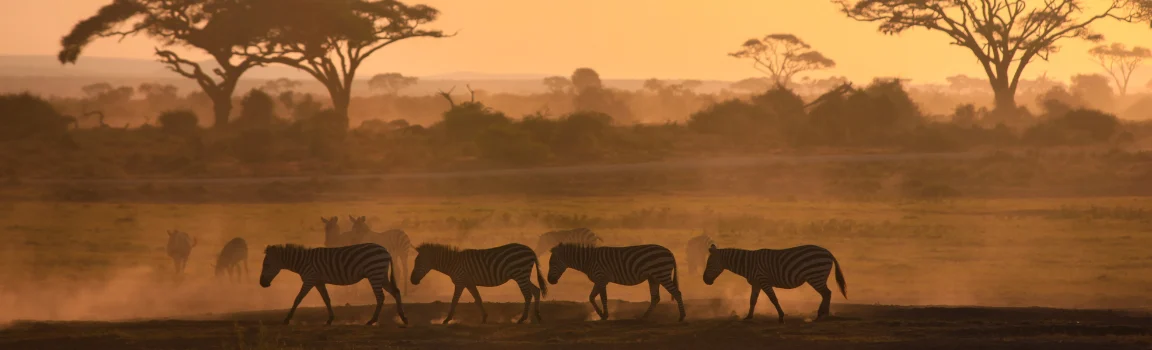
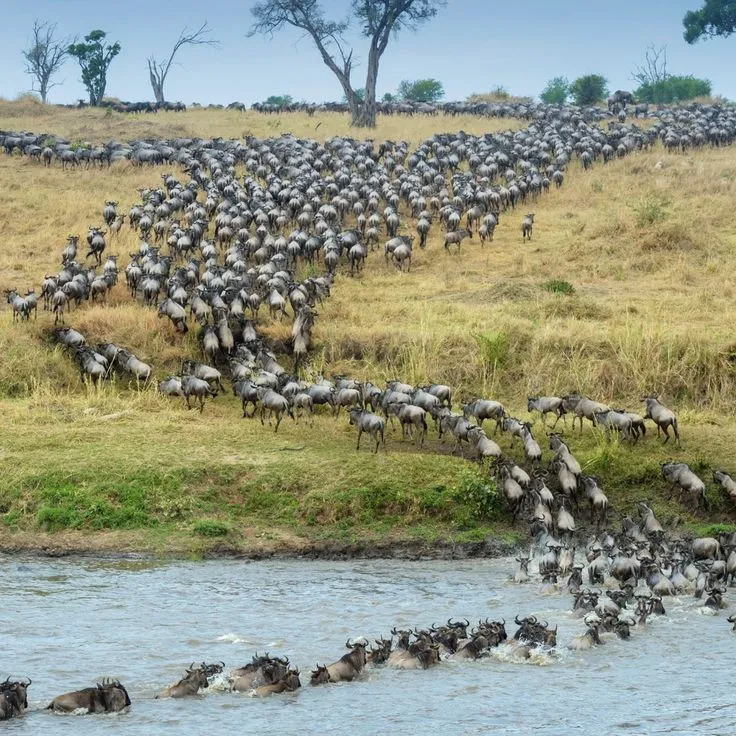
The Great Migration is the most famous wildlife movement in Africa and one of the main reasons travellers choose Serengeti for a Tanzania safari. Each year, enormous herds of wildebeest, zebras and gazelles move through the Serengeti Mara ecosystem in search of fresh grazing and water, followed by lions, cheetahs, hyenas, crocodiles and other predators.
For Indian travellers planning a Tanzania safari in 2026, the Great Migration can be the highlight of the journey but only if the itinerary is planned correctly. Migration travel is not about booking "Serengeti" in general. It is about choosing the right Serengeti region for the right month, staying long enough, selecting the correct camp location and understanding that nature does not follow a fixed calendar. Our Serengeti safari package is built around exactly this kind of precision planning.
Many travellers hear about the dramatic Mara River crossings and assume that this is the entire migration. It is not. The migration has several important phases: the calving season in Southern Serengeti and Ndutu, the movement through Central and Western Serengeti, the Grumeti region, the Northern Serengeti river crossing period, and the return movement toward the southern plains. For wider Tanzania planning, read our Serengeti Safari Guide or explore our Tanzania safari packages from India.
What Is the Great Migration?
The Great Migration is the seasonal movement of wildebeest, zebras and gazelles across the Serengeti ecosystem in Tanzania and the Masai Mara ecosystem in Kenya. The herds move in response to rainfall, grass growth and water availability. Although the migration is often described as a circular movement, it is not a perfectly predictable loop rainfall patterns shift, grass quality changes and herds may move earlier or later depending on conditions.
The major visual moments include:
- Calving season in the southern plains
- Predator action around newborn calves
- Herd movement through Central Serengeti
- Western Corridor and Grumeti region movement
- Mara River crossing possibilities in Northern Serengeti
- Return movement toward the southern Serengeti plains
For travellers, the most important point is simple: the Great Migration is not in one place all year. Your safari must be matched to the correct season and region.
Why Serengeti Is the Best Place to See the Great Migration
Serengeti is the core landscape of the Great Migration. While the migration also reaches Kenya's Masai Mara in certain months, most of the annual cycle occurs within Tanzania's Serengeti ecosystem. Serengeti offers multiple migration experiences across the year — in the south, the calving season creates one of the most dramatic wildlife periods in Africa; in the central and western areas, herds move across open plains and corridors; in the north, the Mara River crossings create the high drama scenes that many travellers associate with migration safaris.
For Indian travellers, Serengeti is also highly practical because it combines well with Ngorongoro Crater, Tarangire and Zanzibar. A well designed trip can include migration viewing, Big Five safari and a beach extension in one itinerary — making Tanzania a stronger choice than a river crossing only safari for travellers who want a complete East Africa experience.
Great Migration Month by Month Guide for 2026
January: Southern Serengeti and Ndutu Begin to Build
Best region: Southern Serengeti / Ndutu
Best for: Green landscapes, early calving movement, photography
Recommended stay: 3 to 4 nights
January is usually associated with the southern Serengeti plains and the Ndutu region. The herds gather where fresh grass follows seasonal rains. The landscape is greener, the light is soft, and wildlife photography can be excellent. This is a strong month for travellers who want beautiful scenery, active plains and fewer peak season crowds compared with July to September.
February: Peak Calving Season
Best region: Southern Serengeti / Ndutu
Best for: Calving season, predator action, photographers
Recommended stay: 4 nights if migration is the main purpose
February is one of the most important months for migration travel in Tanzania. The southern plains and Ndutu region are usually the centre of calving activity. Large numbers of wildebeest calves may be born within a short period, attracting predators such as lions, cheetahs and hyenas.
This is not the river crossing version of the migration, but it is equally powerful. The drama is different: new life, predator tension, open plains and constant movement. For wildlife photographers and serious safari travellers, February can be one of the finest months in Serengeti.
March: Calving Season Continues, Movement Begins to Shift
Best region: Southern Serengeti / Ndutu
Best for: Calving aftermath, predators, green season safari
Recommended stay: 3 to 4 nights
March can still be excellent in the southern plains, though the exact movement depends on rainfall and grass conditions. Herds may remain in the Ndutu and southern Serengeti region or begin shifting gradually. The landscape remains green and photogenic. Weather can become less predictable as the long rains approach, but wildlife activity can still be very rewarding.
April: Long Rains and Green Season
Best region: Central Serengeti / shifting herds
Best for: Green landscapes, lower rates, flexible travellers
Recommended stay: 3 nights, with careful camp selection
April is part of the long rainy season in Tanzania. The Serengeti becomes lush, skies become dramatic and photography can be beautiful. Tanzania's official tourism site highlights the green season in Serengeti for lush landscapes, dramatic skies, newborn wildlife and photography opportunities.
However, April is not the safest month for first time luxury travellers who want the most predictable conditions. Some camps may close, roads may be affected and weather can interrupt plans. For flexible travellers and photographers, April can be attractive. For honeymooners and families wanting smooth logistics, June to October or January to February may be better.
May: Green Season and Movement Through Central Areas
Best region: Central / Western movement zones
Best for: Lower crowds, photography, value travel
Recommended stay: 3 nights or more
May remains part of the wetter period. Herds may move through central or western areas depending on rainfall. Visitor numbers are usually lower than peak season, and the landscape can be beautiful. This is a good value month for travellers who understand the trade off: better rates and fewer crowds, but more weather uncertainty.
June: Western Corridor and Transition Toward the North
Best region: Western Corridor / Central to Western movement
Best for: Transition movement, fewer crowds than peak season
Recommended stay: 3 to 4 nights
June is a transition month. As the landscape dries, herds often move toward the Western Corridor and then further north. This can be a strong month for migration travellers who want action before the peak northern river crossing crowds. The Grumeti region may become important during this period, though exact movement varies. June can be excellent for travellers who want migration possibilities and slightly less crowd pressure than July or August.
July: Northern Serengeti Becomes Important
Best region: Northern Serengeti / Kogatende / Mara River area
Best for: River crossing possibilities, dry season safari
Recommended stay: 4 nights if crossings are a major priority
July is one of the most popular months for Great Migration safaris. Herds often move toward Northern Serengeti, where the Mara River becomes the focus. This is the beginning of the high demand river crossing window. Crossings are never guaranteed on specific days, but staying in the correct northern region improves the chances. For Indian travellers planning July travel, early booking is essential — luxury camps in Northern Serengeti are limited and demand is high.
August: Peak River Crossing Season
Best region: Northern Serengeti / Mara River
Best for: River crossing possibilities, high drama migration safari
Recommended stay: 4 nights minimum
August is one of the strongest months for travellers hoping to see river crossings in Northern Serengeti. The herds may gather near the Mara River, hesitate, move back, cross suddenly or change direction based on pressure, weather and grazing. River crossings are dramatic because they involve uncertainty — crocodiles, steep banks, herd panic and predator presence can all shape the event. But they can also require patience, with travellers sometimes waiting for hours or days. A good guide is essential in August, as is realistic expectation management.
September: Strong Northern Serengeti Migration Month
Best region: Northern Serengeti
Best for: River crossing possibilities, premium safari travel
Recommended stay: 4 nights
September remains one of the best months for Northern Serengeti migration travel. Weather is generally favourable, wildlife viewing is strong, and river crossing possibilities remain important. This is also a busy month — travellers should expect higher rates and limited availability at good camps. For luxury travellers, September is excellent if booked early and planned around the right camp location.
October: Late Northern Serengeti and Dry Season Wildlife
Best region: Northern Serengeti / Central Serengeti depending on movement
Best for: Late migration, dry season wildlife
Recommended stay: 3 to 4 nights
October can still be strong in Northern Serengeti, though migration movement may begin shifting depending on conditions. The dry season continues, and general wildlife viewing remains excellent. This month can work well for travellers who want a slightly later dry season safari with good conditions and potentially lower demand than the August to September peak.
November: Short Rains and Return Movement
Best region: Central Serengeti / movement toward southern plains
Best for: Shoulder season value, fewer crowds
Recommended stay: 3 nights
November usually brings short rains. The herds may begin moving back toward central and southern areas as fresh grass appears. Weather can be unpredictable, but the landscape starts changing from dry to green. This is a shoulder month — it can be good value for flexible travellers, but it is not ideal if the goal is river crossings.
December: Movement Toward Southern Serengeti
Best region: Central / Southern Serengeti depending on rains
Best for: Festive travel, early southern movement
Recommended stay: 3 to 4 nights
December often marks the return toward southern Serengeti and Ndutu as the cycle prepares for another calving season. Festive season travel is in high demand and can be expensive. For Indian families and honeymooners travelling around Christmas and New Year, early booking is important. December can combine well with Zanzibar, but prices rise significantly during the festive window.
Best Months for Each Great Migration Experience
Best Months for Calving Season
January to March, with February often the strongest month. Choose Southern Serengeti or Ndutu. This is best for newborn calves, predator action, cheetah sightings and green season photography.
Best Months for River Crossings
July to September, with August and September often the most popular. Choose Northern Serengeti near the Mara River. Crossings cannot be guaranteed, but staying in the right area for enough nights improves your chances.
Best Months for Lower Crowds
April, May, November and early December. These months can offer value and fewer vehicles, but weather and movement may be less predictable.
Best Months for Luxury Travel Comfort
June to October and December to February. These periods usually offer the strongest combination of wildlife, weather and lodge operations.
Great Migration Route: How the Herds Move
The migration generally follows a broad annual pattern:
Southern Serengeti and Ndutu
The cycle often begins in the southern plains, where fresh grass attracts the herds. This area is especially important during calving season.
Central Serengeti
As the season changes, the herds may move through central areas. Central Serengeti is also strong for resident predators and year round wildlife.
Western Corridor and Grumeti
The herds may move through western areas, where river systems and corridor landscapes become important during transition months.
Northern Serengeti and Mara River
The northern region becomes the focus during the dry season, when herds may cross the Mara River. This is the most famous visual phase of the migration.
Return Toward the South
As rains begin again, the herds gradually move back toward the southern plains, completing the cycle. This route is useful for planning, but not fixed — rainfall drives the movement, and every year has variation.
Mara River Crossings: What to Expect
Mara River crossings are the most famous Great Migration event, but they are also the most misunderstood. A river crossing is not a scheduled show. Herds may gather near the river for hours or days, then move away without crossing. They may cross suddenly with little warning. They may cross and then cross back later. Weather, predator presence, herd pressure, river level and grazing conditions all affect movement.
For travellers, this means patience is essential. A good migration itinerary should not be built around a single day in Northern Serengeti. If crossings are your main goal, plan at least four nights in the region. The best guides know how to wait, where to position the vehicle and when to move. Ethical guiding is important because vehicles should not pressure herds toward the river — a responsible river crossing safari respects animal movement and avoids aggressive crowding.
Calving Season in Southern Serengeti and Ndutu
Calving season is one of the most underrated migration experiences for Indian travellers. Many people focus only on river crossings, but calving season can be equally dramatic. During this period, the southern plains may fill with wildebeest and zebra. Newborn calves appear, predators become active, and the open landscape makes wildlife behaviour easier to observe.
The atmosphere is different from river crossing season. Instead of one explosive moment, calving season offers daily wildlife drama — movement, births, predator tension, mother calf behaviour and cheetahs hunting on open plains. For honeymooners, photographers and travellers who prefer slightly fewer crowds than peak northern migration months, January to March is a powerful option.
Northern Serengeti vs Southern Serengeti for Migration
Choose Northern Serengeti If:
You want river crossing possibilities, dry season safari, dramatic migration tension and premium camps near the Mara River.
Best months: July to October
Best traveller type: Wildlife photographers, luxury travellers, repeat safari guests
Choose Southern Serengeti / Ndutu If:
You want calving season, newborn wildlife, predator action, green landscapes and open plains.
Best months: January to March
Best traveller type: Photographers, honeymooners, first time migration travellers with flexible expectations
Choose Central Serengeti If:
You want year round wildlife, big cats and a practical base when migration movement is uncertain.
Best months: Many months of the year
Best traveller type: First time travellers and shorter Tanzania itineraries
How Many Days Do You Need for a Great Migration Safari?
- 2 Nights: Too short if migration is the main goal. You may get lucky, but chances are limited.
- 3 Nights: Acceptable for general migration area safari, especially if combined with Ngorongoro or Tarangire.
- 4 Nights: Recommended for river crossing season or calving season. This gives better chances and a more relaxed experience.
- 5 Nights or More: Best for serious photographers, repeat safari travellers and guests who want to stay in more than one Serengeti region.
For Indian travellers flying all the way to Tanzania, four nights in the selected migration region is the best practical recommendation if the migration is the main purpose of the trip.
Best Luxury Camps for Migration Safaris
The best camp is not always the most expensive camp, it is the camp in the right place for your travel month. Our guide to the best luxury lodges in Serengeti breaks down top options by location and season.
Mobile Migration Camps
Mobile camps move seasonally to follow herd movement. They are often excellent for migration focused travel because location is the priority.
Northern Serengeti Luxury Camps
These camps are best during July to October, especially for travellers targeting Mara River crossings. They are in high demand and should be booked early.
Ndutu and Southern Serengeti Camps
These are best during January to March calving season. Some camps operate seasonally, while others are permanent or semi permanent.
Central Serengeti Camps
These are useful for year round big cat viewing and for itineraries where migration location is uncertain or the trip is shorter. For luxury travellers, camp selection should balance location, guiding quality, comfort, food, vehicle policy and transfer logistics.
Great Migration Safari Cost in 2026
Great Migration safaris are usually more expensive than standard Tanzania safaris because demand is high during peak movement periods and the best camps have limited capacity. As a practical 2026 planning range:
Premium Migration Safari
Approximate cost: USD 1,000–1,500 per person per safari day
This usually includes good camps, park fees, meals, guided game drives and safari logistics.
Luxury Migration Safari
Approximate cost: USD 1,600–2,500 per person per safari day
This includes stronger camp locations, better guiding, premium service, full board meals,
private or high quality shared game drives and smoother transfers.
Ultra Luxury Migration Safari
Approximate cost: USD 2,800+ per person per safari day
This may include top camps, fly in transfers, exclusive vehicles, premium suites, private
guiding and high touch service. Northern Serengeti during July to September and
festive season calving trips can be particularly expensive — booking early helps
secure better camp choices.
Great Migration Safari from India: Travel Planning Notes
Indian travellers usually reach Tanzania through one stop routes via international hubs such as Dubai, Doha, Addis Ababa or Nairobi. Kilimanjaro International Airport is usually the best arrival point for Northern Tanzania safari circuits. For migration safaris, internal flights are strongly recommended — Northern Serengeti and southern migration regions can be time consuming by road, and flying saves time and keeps the itinerary comfortable.
A practical route for Indian travellers is:
India → Kilimanjaro International Airport → Arusha → Serengeti migration region → Ngorongoro → Zanzibar → India
For luxury travellers, arriving through Kilimanjaro and departing from Zanzibar creates the smoothest safari and beach flow.
Tanzania Visa Guidance for Indian Travellers
Indian passport holders require a Tanzania visa. The official Tanzania eVisa system applies to the United Republic of Tanzania, including both mainland Tanzania and Zanzibar. Travellers should check current requirements and apply through the immigration, official portal before departure. Passports should have sufficient validity, blank pages and supporting documents. Families should complete documentation for each traveller separately. Visa planning should be completed early, especially for peak migration months and festive season travel.
Food and Dietary Requirements During Migration Safaris
Migration camps are often in remote areas, so food planning is important. Vegetarian meals are usually possible at premium camps, but detailed dietary requirements must be communicated before arrival. Indian vegetarian, Jain, vegan and no onion/no garlic meals should be requested at the booking stage. Remote camps plan supplies in advance, and last minute requests can limit meal options. Luxury camps are better equipped for dietary preferences than basic camps, but advance communication remains essential.
What to Pack for a Great Migration Safari
Pack neutral coloured clothing, a light jacket, comfortable shoes, sunglasses, sunscreen, hat, binoculars, camera gear, spare batteries, memory cards, insect repellent and personal medication. For river crossing season, patience is part of the experience — bring binoculars and a good zoom lens if photography matters. For calving season, prepare for green landscapes, possible rain and softer ground conditions; lightweight rain protection can be useful. Use soft sided luggage if taking internal flights, as bush aircraft often have stricter baggage limits.
Common Mistakes to Avoid
- Expecting the Migration in One Fixed Place: The migration moves. The right region depends on the month.
- Booking Serengeti Without Checking the Region: A general "Serengeti package" is not enough. Central, Northern, Southern and Western Serengeti deliver different experiences.
- Expecting Guaranteed River Crossings: Crossings are natural and unpredictable. No operator can guarantee them.
- Staying Too Few Nights: For migration focused travel, two nights is usually not enough. Four nights is better.
- Choosing Room Luxury Over Location: For migration safaris, location and guiding matter more than room design.
- Booking Too Late: Peak migration camps sell out early. July to September and January to February should be booked well in advance.
- Ignoring Ethical Safari Behaviour: Vehicles should never pressure herds toward crossings. Responsible guiding protects both the animals and the experience.
Why Plan Your Great Migration Safari with Luxury Unlocked?
Luxury Unlocked designs Great Migration safaris for Indian travellers who want the right Serengeti region, the right camp and the right season. Migration planning requires precision — a generic Serengeti itinerary is not enough.
We help you choose between Southern Serengeti, Ndutu, Central Serengeti, Western Corridor and Northern Serengeti based on your travel month and wildlife priority. We also coordinate Ngorongoro, Tarangire, Zanzibar, internal flights, private vehicles, vegetarian meals, honeymoon experiences and complete travel logistics from India.
Whether you want a river crossing safari, a calving season safari, a luxury migration honeymoon or a Great Migration and Zanzibar itinerary, our specialists can design a 2026 Tanzania journey around your dates and travel style. Explore our Tanzania safari packages from India or contact Luxury Unlocked to build your private Great Migration safari.
Great Migration in Serengeti 2026 – FAQs
January to March is best for calving season in Southern Serengeti and Ndutu. July to September is best for river crossing possibilities in Northern Serengeti. The migration moves throughout the year depending on rainfall and grazing — the correct Serengeti region must match the travel month.
August and September are often among the strongest months for Mara River crossing possibilities in Northern Serengeti. July and October can also be good depending on herd movement and rainfall. These months are in high demand — early booking of Northern Serengeti camps is strongly recommended.
No. River crossings are natural events and cannot be guaranteed for a specific date. Herds may wait near the river, move away or cross suddenly without warning. No ethical safari operator should promise a crossing on a particular day. Staying four or more nights in the right Northern Serengeti area significantly improves your chances.
Stay in Northern Serengeti, especially near the Kogatende or Mara River region, during the July to September period. Camp selection matters — the best camps have good access to river crossing areas and experienced guides who know when and where to position. Book early because availability is limited during peak months.
February is often considered the peak calving month, though January and March can also be excellent depending on rainfall and herd movement. The southern plains and Ndutu region are the focus during this period, with newborn wildebeest calves attracting lions, cheetahs and hyenas.
They are different experiences, not directly comparable. Calving season offers newborn wildlife, daily predator action, open plains and green landscapes. River crossing season offers high drama movement near the Mara River with the tension of crocodiles and herd panic. Both are excellent migration experiences — the best choice depends on your travel month and wildlife priorities.
Four nights in the selected Serengeti migration region is recommended if migration is the main purpose of the trip. Three nights can work if combined with Ngorongoro or Tarangire. Two nights is usually too short for migration focused travel. For serious photographers or travellers combining multiple Serengeti regions, five nights or more is ideal.
The migration moves through the Serengeti ecosystem in Tanzania and the Masai Mara ecosystem in Kenya. However, much of the annual cycle — including calving season and the majority of herd movement — occurs within Tanzania's Serengeti. For a complete migration experience, Tanzania is the stronger destination.
Yes, especially for families with older children who enjoy wildlife and can manage longer game drives. Families should choose private vehicles, comfortable camps with flexible meal times, and ideally combine the migration safari with a Zanzibar beach stay. Calving season in January to March can be particularly engaging for children because of the newborn animal activity.
Yes. A Great Migration safari followed by Zanzibar is one of Tanzania's best luxury itineraries. Most travellers complete the safari first and then fly to Zanzibar for beaches and relaxation. The charter flight from Serengeti or Arusha to Zanzibar takes approximately 60 to 90 minutes. Three to five nights in Zanzibar after the migration safari is the most popular format for Indian travellers.
A premium migration safari may cost around USD 1,000 to 1,500 per person per safari day. Luxury options often range from USD 1,600 to 2,500 per person per day, while ultra luxury safaris with fly in routing and top camps can exceed USD 2,800 per person per day. Costs are higher during peak migration months — July to September and January to February — and booking early helps secure better camp choices.
Premium camps can usually arrange vegetarian meals with advance notice. Jain, vegan and no onion/no garlic requirements should be communicated clearly before travel, ideally at the booking stage. Migration camps are often in remote areas where supplies are planned ahead — last minute dietary requests may limit options significantly.