
Great Migration Dates in 2027: Month-by-Month Guide for Masai Mara Safaris
The Great Migration is one of the most extraordinary wildlife events on Earth. Every year, roughly 1.3–1.5 million wildebeest, along with around 200,000 zebras and large numbers of gazelles, move in a continuous loop across the Serengeti–Mara ecosystem in search of fresh grazing. Between July and October, this movement reaches Kenya’s Masai Mara, bringing dramatic river crossings, intense predator–prey encounters and some of the most iconic safari moments in Africa. If you are planning a migration safari, understanding when to go, what you are likely to see each month and who each period suits best is essential.
If you are new to safari travel, it helps to first understand the geography, wildlife zones, and seasonal movement patterns of the Masai Mara destination before planning your Great Migration safari.
Great Migration safari planning benefits from the perspective of a trusted travel agency for Africa .
What it means for planning 2027:
- Herds arrived early in 2026. Guides reported the first groups crossing the Sand River and small crossings on the Mara River in late June, ahead of the usual July window. Arrival can shift by several weeks either way, depending on rainfall.
- The reserve fee doubles on 1 July. Non-resident adults pay $100 per day until 30 June and $200 per day from 1 July to 31 December, so every migration month is charged at the higher rate.
- For 2027, book river-side camps for August 9–12 months ahead.
When Is the Great Migration in Masai Mara?
Important reality check: The Great Migration does not follow fixed calendar dates. Herd movement depends on rainfall, grass availability and natural behaviour, not tourism schedules.
What Is the Great Migration?
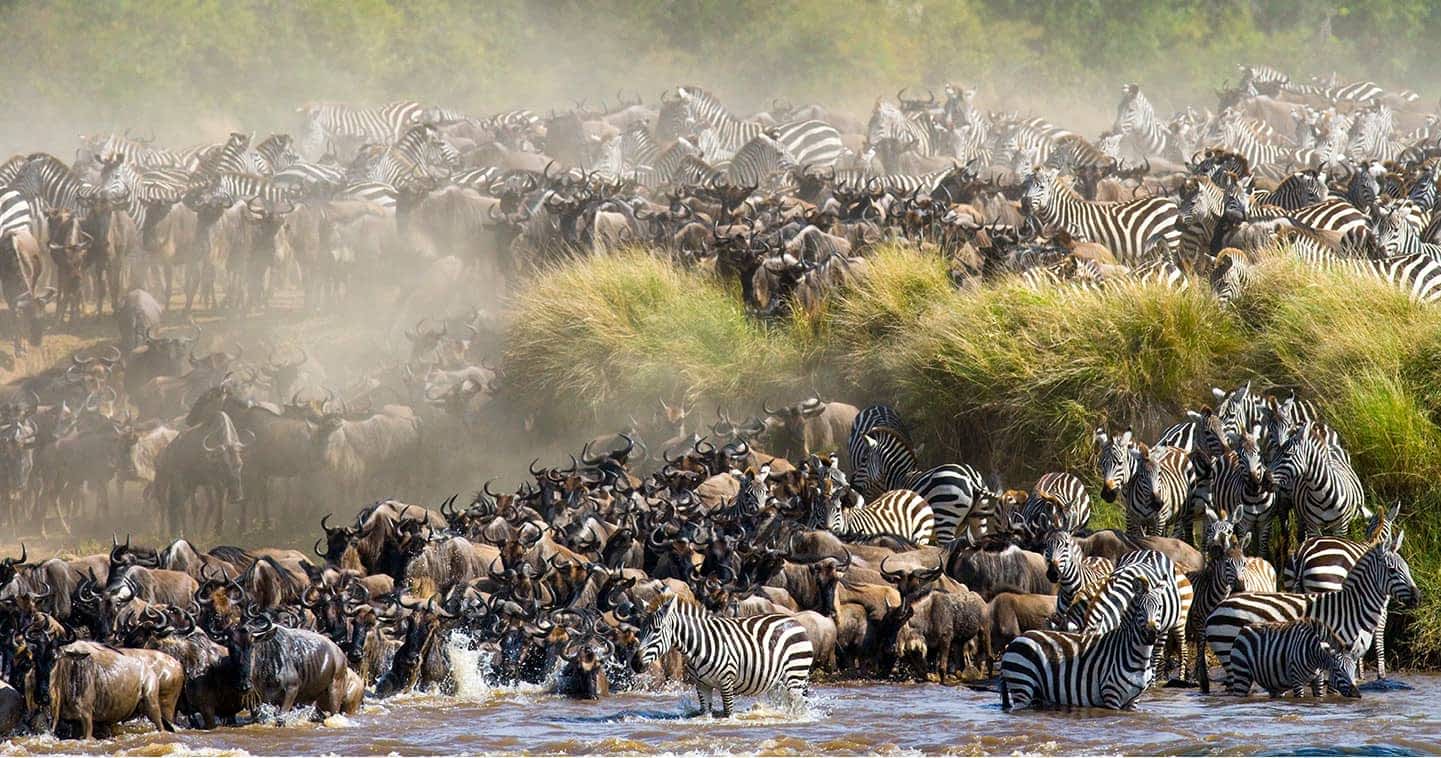
The Great Migration is not a single event, but a year-round circular movement across northern Tanzania and southern Kenya (National Geographic). The herds calve in Tanzania’s southern Serengeti around January–February, move north through the year, and spend the dry season in the Mara before heading south again with the short rains. When herds enter the Masai Mara, the landscape becomes a stage for:
- Large-scale grazing movements
- Predator concentrations (lions, cheetahs, leopards, hyenas)
- River crossings through strong currents past large Nile crocodiles
The Masai Mara phase is especially famous because of its compressed geography, which increases the intensity of wildlife interactions.
Why Timing Matters More Than Luxury Alone
No authority can schedule the herds. The Masai Mara National Reserve is managed by the Narok County Government, and Kenya’s national parks by the Kenya Wildlife Service , but wildlife movement itself is natural and unmanaged. This means:
- Being in the right region at the right time matters more than hotel star ratings
- Staying longer improves your chances more than chasing “guaranteed” crossings
- Patience and flexibility are part of the experience
Great Migration in Masai Mara: Month by Month
Late June (early option): In some years, including 2026, the first herds crossed into the southern Mara in late June. Travelling in the last week of June can give you early migration activity while the reserve fee is still $100 per day, though sightings at this stage are less certain.
July – Migration Arrival Phase
What’s happening
- Herds move from northern Serengeti into the southern Masai Mara, often crossing the Sand River first
- Early Mara River crossings may occur, but are not yet consistent
Why visit in July
- Lower crowd levels compared to August
- Fresh grazing attracts predators
- Cool, dry weather
Who should go
- First-time safari travellers
- Photographers who prefer space
- Couples seeking a calmer migration experience
Cost impact
- High-season lodge rates and the $200 daily reserve fee start on 1 July; lodge rates are often a little lower than in August
Best-fit itinerary
August – Peak Migration & Highest Drama
What’s happening
- Large herds fully established inside the Masai Mara
- Frequent, but unpredictable, Mara River crossings
- High predator density around crossing points
Why visit in August
- Highest probability of dramatic wildlife action
- Iconic safari imagery (crossings, dust, predators)
Trade-offs
- Peak crowds, with many vehicles waiting at popular crossing points
- Highest lodge and flight prices; also Indian school term, so families have less flexibility
- Popular areas can become congested
Who should go
- First-time Africa travellers who want the “classic” migration
- Wildlife enthusiasts chasing iconic moments
Who should avoid
- Travellers seeking solitude or privacy
Cost impact
- Highest prices of the year
- Book river-side camps 9–12 months in advance
Best-fit itinerary
September – Sustained Migration with Slightly Fewer Crowds
What’s happening
- Continued crossings (still unpredictable), sometimes in both directions as herds follow local rain
- Herds spread across a wider area of the reserve
Why visit in September
- Migration still very active
- Slightly fewer vehicles than August
- Excellent predator sightings
Who should go
- Repeat safari travellers
- Serious photographers
- Travellers staying 4–5 nights
Cost impact
- Still peak pricing, but sometimes marginally softer than August
Best-fit itinerary
October – Migration Exit & Balance Phase
What’s happening
- Herds often stay into October, then start moving back towards the Serengeti as the short rains begin (usually late October to November)
- Return crossings back across the Mara River are possible
- Resident wildlife remains abundant
Why visit in October
- Fewer crowds
- Calmer safari rhythm
- Still strong wildlife sightings
- Fits the Diwali break
Who should go
- Luxury travellers
- Couples and honeymooners
- Families with older children
Cost impact
- Lodge rates begin to soften compared to August–September; the reserve fee stays at $200
Recommended itinerary
Are River Crossings Guaranteed?
No. River crossings are unpredictable. Herds may gather at the bank for hours or days before crossing, turn back at the last moment, or cross several times in one day.
How to improve your chances
- Stay 4 nights or more
- Choose a lodge close to the Mara River crossing points
- Travel with flexible game drive schedules and a packed lunch, so you can wait at the river
- Choose a guide who keeps a respectful distance; vehicles crowding the bank can stop herds from crossing
Where to Stay for the Migration
- Near the Mara River (central and western reserve): Closest to the main crossing points from late July to September.
- Mara Triangle (west of the Mara River): Managed separately by the Mara Conservancy, with usually fewer vehicles at crossings; fees are similar to the main reserve.
- Southern reserve (Sand River area): Often the first place herds arrive, so good for late June and July.
- Private conservancies (north of the reserve): Quieter, with night drives and walks, but further from the main crossing points, so plan full-day drives into the reserve.
Best Safari Duration for the Great Migration
| Stay Length | Migration Viewing Success (rough guide in peak season) |
|---|---|
| 2 nights | Low |
| 3 nights | Moderate |
| 4 nights | High |
| 5+ nights | Very High |
Longer stays matter more than exact dates.
Best Months by Traveller Type
Couples & Honeymooners
Best months: Late July or October
- Fewer crowds than peak
- Romantic lodge atmosphere
- More privacy during game drives
Families with Children
Best months: Late June, or October during the Diwali break
- Dry weather = smoother game drives
- Better road conditions
- Less fatigue than peak August congestion
- Late June overlaps with Indian summer holidays in many states
Photographers
Best months: August & September
- Highest action probability
- Dust, crossings, predator interactions
- Clear dry-season skies, best in early-morning and late-afternoon light
Budget Conscious Travellers
Best migration-window option: Late June, late July or early October
- Migration presence with lower lodge rates than August; late June also has the lower $100 reserve fee
Does the Great Migration Affect Safari Costs?
Yes, significantly.
- August–September: Highest prices, limited availability
- Late July & October: Better value within migration season
- Reserve fee: $200 per non-resident adult per day from July to December, against $100 from January to June (children aged 9–17 pay $50)
- Hot air balloon safari: typically, depending on operator and season; balloons over the river area book out early in August
- Non-migration months: Lower prices, quieter parks
A full safari cost breakdown is available in Masai Mara Cost from India in 2027 planning guide.
Migration Season vs Non-Migration Season
| Aspect | Migration Season | Non-Migration Season |
|---|---|---|
| Wildlife drama | Extremely high | Moderate |
| Crowds | High | Low–Medium |
| Cost | High ($200/day reserve fee) | Lower ($100/day reserve fee from January to June) |
| Predictability | Low | High |
Masai Mara delivers excellent wildlife all year, not only during migration. For a full seasonal overview, also read Best Time to Visit Masai Mara in 2027 .
Flying to the Migration From Your City
Mumbai is the only Indian city with regular non-stop flights to Nairobi (Kenya Airways and IndiGo, about 6 hours 15 minutes) (FlightsFrom). From other cities you connect once. A light-aircraft flight from Nairobi’s Wilson Airport reaches the Mara in about 45–60 minutes, which matters in migration season: arriving by late morning gives you a first afternoon at the river. Peak-season seats sell out early, so book international and Mara flights together.
| Departure City | Typical Routing to Nairobi | Migration Planning Tip | Our Packages |
|---|---|---|---|
| Mumbai | Non-stop (Kenya Airways, IndiGo) | Early-morning arrival usually allows a same-day flight to the Mara | Masai Mara tour packages from Mumbai |
| Delhi NCR | One stop via Mumbai, Addis Ababa or a Gulf hub | Book August flights 4–6 months ahead | Masai Mara tour packages from Delhi |
| Bangalore | One stop via Mumbai, Addis Ababa or a Gulf hub | A 4-night stay offsets a longer travel day | Masai Mara tour packages from Bangalore |
| Hyderabad | One stop via Addis Ababa (Ethiopian), Mumbai or a Gulf hub | Check connection times against Mara flight departures | Masai Mara tour packages from Hyderabad |
| Kolkata | One stop via Mumbai, Delhi or a Gulf hub | Add a Nairobi night before flying to the Mara | Masai Mara tour packages from Kolkata |
Before you fly: Indian passport holders need a Kenya eTA from the official portal, etakenya.go.ke, and a yellow fever vaccination certificate, which India checks on your return from Kenya (High Commission of India, Nairobi). Get vaccinated at least 10 days before you travel.
Final Thoughts for the Great Migration
- Best overall months: August & September
- Best value migration window: Late June, late July or early October
- Best success strategy: Stay 4–5 nights near the Mara River with flexible game drives
The Great Migration is not a scheduled event, and no two days in Masai Mara look the same. Choosing the right month improves your odds, but itinerary length, lodge location, and guide flexibility ultimately determine how immersive your experience feels. Travellers who allow time for patience and adaptation consistently report richer wildlife encounters.
Once your preferred travel window is clear, you can review thoughtfully designed Masai Mara Safari Packages from India , which align seasonal movement with realistic pacing and lodge positioning.
Great Migration in Masai Mara – FAQs
The herds are usually in the Masai Mara from July to October, and in some years, including 2026, the first groups arrive in late June. The highest chances of river crossings are in August and September, though exact timing varies each year with rainfall.
No. River crossings are not guaranteed. They depend on rainfall, herd movement, and natural behaviour. Some days may have multiple crossings, while other days may have none.
August and September offer the highest probability of dramatic river crossings, but they also come with higher crowds and peak-season prices.
From 1 July to 31 December, non-resident adults pay $200 per day to enter the Masai Mara National Reserve, against $100 per day from January to June. Children aged 9–17 pay $50. Each ticket covers one daytime visit, and most safari packages include the fee.
Staying longer significantly improves your chances. As a rough guide in peak season, 3 nights gives a moderate chance, 4 nights a high chance, and 5 or more nights a very high chance. Duration matters more than exact travel dates.
Yes. The Great Migration is ideal for first-time Africa visitors seeking dramatic wildlife behaviour. However, expectations should remain realistic, as crossings are unpredictable.
Late July or October works best for couples, offering migration presence with fewer crowds than August and a more private, relaxed lodge atmosphere.
Late June (during Indian summer holidays) or October (around the Diwali break) suits families best, with dry weather, better road conditions and less congestion than peak August. Private vehicles are recommended for comfort.
Yes. Migration months are peak pricing periods, and the reserve fee is $200 per day from July. August and September have the highest lodge rates, while late July and October offer better value within the season. Lodges near the river often sell out 9–12 months ahead.
Absolutely. Masai Mara has excellent resident wildlife year-round, including lions, leopards, elephants, and cheetahs. Many travellers prefer non-migration months due to fewer vehicles and lower costs.
The biggest mistake is planning too short a stay and expecting guaranteed river crossings. A relaxed itinerary, flexible game drives, and patience lead to the best migration experience.
Sources and References
- Narok County Government (manages the Masai Mara National Reserve and sets entry fees): narok.go.ke
- Kenya Wildlife Service: kws.go.ke
- National Geographic, How wildebeest reshape the Serengeti during their Great Migration: nationalgeographic.com
- Official Kenya Electronic Travel Authorisation portal: etakenya.go.ke
- High Commission of India, Nairobi, vaccination requirement for travel from Kenya: hcinairobi.gov.in
- FlightsFrom, non-stop flights Mumbai–Nairobi: flightsfrom.com